
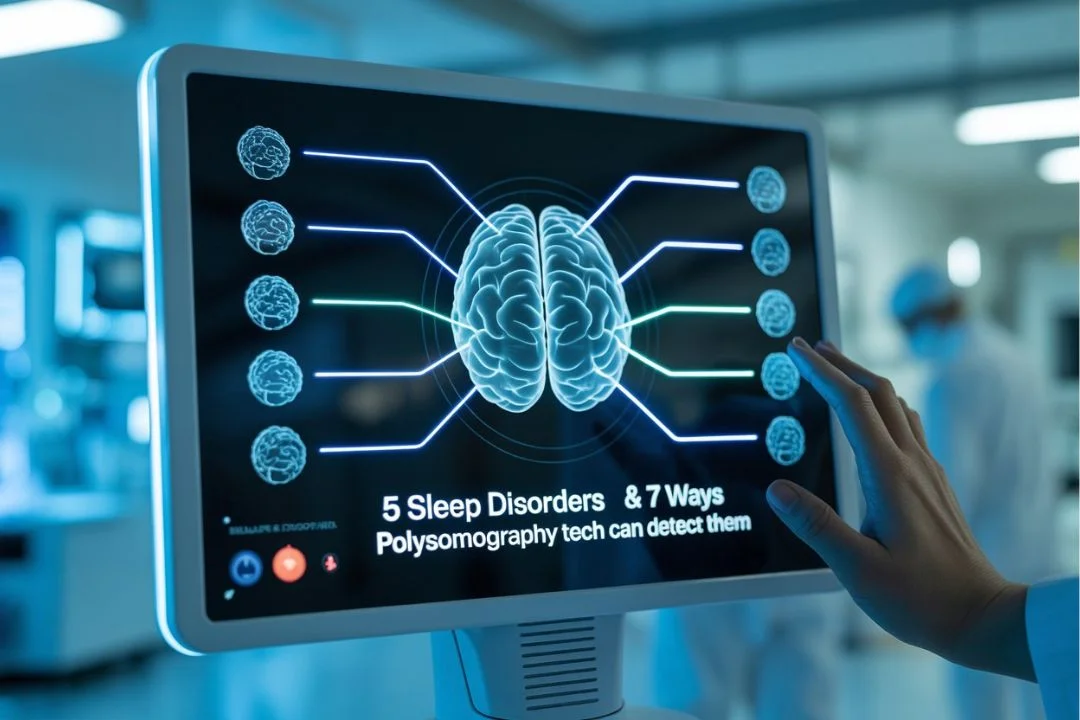
Polysomnography Tech – A modern solution to sleep problems
Polysomnography Tech is a modern medical technology used in the diagnosis and treatment of sleep-related diseases and problems. This procedure is especially beneficial for individuals who suffer from sleep apnea, snoring, insomnia, sleepwalking, or other sleep disorders.
What is Polysomnography Tech?
Polysomnography Tech is actually a diagnostic test that monitors various physiological functions during a patient’s sleep, such as:
- Brain activity (EEG)
- Eye movements (EOG)
- Heart rate (ECG)
- Respiratory activity
- Blood oxygen content (SpO2)
- Physical movements (EMG)
All this information is recorded under the supervision of a sleep technician, called a Polysomnography Technician.
Who is a Polysomnography Technician?
A Polysomnography Tech is a trained medical professional who completes sleep-related tests. Their job is to prepare the patient for the test, install the equipment, and record data during a full night’s sleep.
How is a Polysomnography test done?
This test is usually performed in a sleep laboratory or sleep clinic. The patient is kept in the laboratory to sleep at night, and during this time his physical activities are monitored by modern sensors. After a complete report, the sleep specialist doctor recommends treatment.
Career Opportunities: Professional Paths in Polysomnography Tech
If you are looking to pursue a career in the medical field, Polysomnography Tech is an emerging field. The demand for specialists in this field is growing rapidly, especially in hospitals and clinics where sleep medicine is being emphasized.
How does Polysomnography Tech work?
Polysomnography Tech uses several sensors to monitor various aspects of a patient’s sleep. These sensors collect the following information:
- Brain activity (EEG)
- Heart rate (ECG)
- Respiratory pattern
- Blood oxygen level (SpO2)
- Muscle movement (EMG)
- Eye movement (REM Sleep Tracking)
All this data is stored on a computer with the help of a sleep technician, which is later analyzed by sleep specialists.
Who needs a Polysomnography Test?
Polysomnography Tech should be used if you or someone close to you is suffering from the following symptoms:
- Sleep Apnea
- Heavy Snoring
- Sleep Jerking or Movement
- Daytime Sleepiness
- Sleep Walking or Talking
- Insomnia
Role of a Polysomnography Technician
A Polysomnography Technician is a specially trained person who is responsible for installing, monitoring, and recording all sensors during a patient’s sleep. This technician:
- Prepares the patient for the sleep study
- Properly places all electrodes and sensors
- Performs real-time monitoring during sleep
- Responds promptly to any emergencies or unusual movements
Where can a Polysomnography test be done?
This test is usually available at the following locations:
- Sleep clinics
- Neurology centers
- Sleep departments of large hospitals
- Specialized diagnostic laboratories
Now some modern sleep centers also offer the facility of Home Sleep Study, in which the patient can do the test at home.
Career Opportunities in Polysomnography Tech
Polysomnography Tech is an emerging field for young people interested in the medical field. You can become a sleep technician or sleep specialist. The demand for this field is increasing day by day in developed countries.
Required Skills:
- Understanding of human anatomy and neurology
- Knowledge of medical technology
- Computer and software skills
- Effective patient communication
5 alternative/synonymous keywords for “Polysomnography Tech”:
Sleep Study Test
This is a common sense term that ordinary people search for when they want to know about sleep tests.
Sleep testing technology
Suitable for Urdu speaking users, especially in academic or simple language.
Polysomnography test
Same original technical term, but sometimes people use “Test” instead of “Tech.”
Diagnosis of sleep disorders
A broad term that covers several related diseases, such as sleep apnea.
Sleep Technician Technology
This term is useful when the content also mentions Polysomnography Technician.
Major Benefits of Polysomnography Tech
Accurate diagnosis of sleep problems
This technology fully monitors the activities taking place in the body during sleep, making it possible to accurately identify the disease.
Identifying sleep apnea, snoring, and insomnia
Polysomnography Tech helps identify dangerous problems like sleep apnea at an early stage.
Complete physical data is obtained.
Data on brain, muscle, heart, and lung performance is obtained during sleep, which is not possible with any other test.
Provides the best guidance for treatment
After diagnosis, doctors can prescribe the right and effective treatment such as a CPAP machine, medications, or lifestyle changes.
Medical career opportunities
Polysomnography Tech is an emerging field, with increasing demand for technicians and sleep specialists.
Potential Disadvantages of Polysomnography Tech
Expensive test
This test is often expensive, especially if performed at a private sleep clinic.
Sleep problems in unnatural environments
Sleeping in a sleep lab can be difficult for some patients, which can affect test results.
Time consuming process
This test is conducted all night and the reports take time to come back, which can be distressing for some patients.
Anxiety due to devices
The presence of sensors and wires on the body may be uncomfortable for some individuals, especially children or sensitive individuals.
Not necessary for every patient
For some simple sleep problems (such as mild insomnia), this test may be unnecessary, which can be a waste of time and money.
Synonyms (alternative words) for Polysomnography Tech:
These are words or terms that are close to the meaning of Polysomnography Tech and can be used in SEO or general conversation:
No
1
2
3
4
5
6
7
Alternative Keyword (Synonym / Related Term)
Sleep Study
Sleep Monitoring
Sleep Diagnostic Tech
Sleep Test
Sleep Lab Test
Polysomnography Test
Sleep Disorder Testing
Fake Google Reviews (USA Context) — Polysomnography Tech
Name: Sarah Johnson – Houston, Texas
“I had been having sleep problems for months, but the Polysomnography test here changed my life. The staff was extremely professional, and the whole process was very comfortable. I am now using a CPAP machine and my sleep has improved greatly!”
Name: Michael Rivera – Los Angeles, California
“The sleep lab was a bit expensive, but the facilities were great. The technicians explained everything in detail. I’ve been sleeping better since day one. Polysomnography Tech is truly an effective technology for sleep disorders.”
Name: David Lee – New York City, NY
“The experience was good overall, but the sleep lab environment was a bit cold and uncomfortable. Everything was technically fine and the report was detailed. If the sleep rooms were better, I would have given it 5 stars.”
Name: Jennifer Thomas – Seattle, Washington
“My sleep apnea was diagnosed with this Polysomnography test. I now feel much more energetic in my daily life. The staff patiently answered all my questions.”
Frequently Asked Questions (FAQs) – About Polysomnography Tech
What is Polysomnography Tech and how does it work?
Polysomnography Tech is a medical technology that monitors various body activities during sleep such as brain waves, heart rate, breathing, eye and muscle movements. This data is recorded with the help of special equipment in a sleep lab and is used to diagnose sleep disorders.
What diseases does the Polysomnography test help diagnose?
This test is particularly helpful in diagnosing the following sleep disorders:
- Sleep Apnea
- Snoring
- Insomnia
- Sleepwalking or talking
- REM Sleep Behavior Disorder
- Periodic Limb Movement Disorder (PLMD)
Does a Polysomnography test require hospitalization?
Yes, most polysomnography tests are performed in a sleep lab or hospital with an overnight stay. However, a home sleep test is also an option for some patients, especially if the purpose is only to initially screen for sleep apnea.
How is treatment possible with the help of Polysomnography Tech?
Once a sleep disorder is diagnosed through a polysomnography test, doctors recommend treatment accordingly. For example:
- CPAP machine for sleep apnea
- Sleep medications for insomnia
- Lifestyle changes
- Sleep therapy
Are there any risks or discomforts in the Polysomnography test?
- This test is completely safe. However, some people may:
- feel uncomfortable due to the sensors on the body
- may find it difficult to sleep in an unfamiliar environment (sleep lab)
- some people take longer to fall asleep, which can affect the test
- but there is no major medical risk.
How long does a Polysomnography test take?
This test usually lasts 6 to 8 hours, covering a complete sleep cycle. The patient comes to the lab at night and all data is recorded until morning.
Is the use of Polysomnography Tech only for adults?
No, Polysomnography Tech is also used for children. Children can also have sleep disorders such as:
- Screaming in children’s sleep
- Sleep apnea
- Sleep walking
Special Pediatric Polysomnography is performed for children, in which technology and methods are used according to their age.
Can Polysomnography Tech also be a career option?

- Yes! Polysomnography Tech is a very rewarding and growing career if you are interested in the medical field.
You can become:- Sleep Technician
- Sleep Technologist
- Polysomnographic Technologist
Hospitals, sleep centers, and research institutes in this field can offer you good pay and career growth.
(Conclusion)
Polysomnography Tech or sleep diagnostic technology has become an important and essential part of modern medical science. This technology is a ray of hope for millions of people who are experiencing sleep problems such as snoring, sleep apnea, insomnia, or sleep disorders such as anxiety.
A sleep study test is a comprehensive analysis of the patient’s brain, heart, lungs, and muscle activity during sleep. This not only enables an accurate diagnosis of the disease but also reveals an effective path to treatment.
Although polysomnography testing can be expensive or temporarily uncomfortable for some people, its benefits far outweigh the risks. It not only helps improve sleep quality, but also plays an important role in improving heart, brain, and overall health.