
(Introduction)
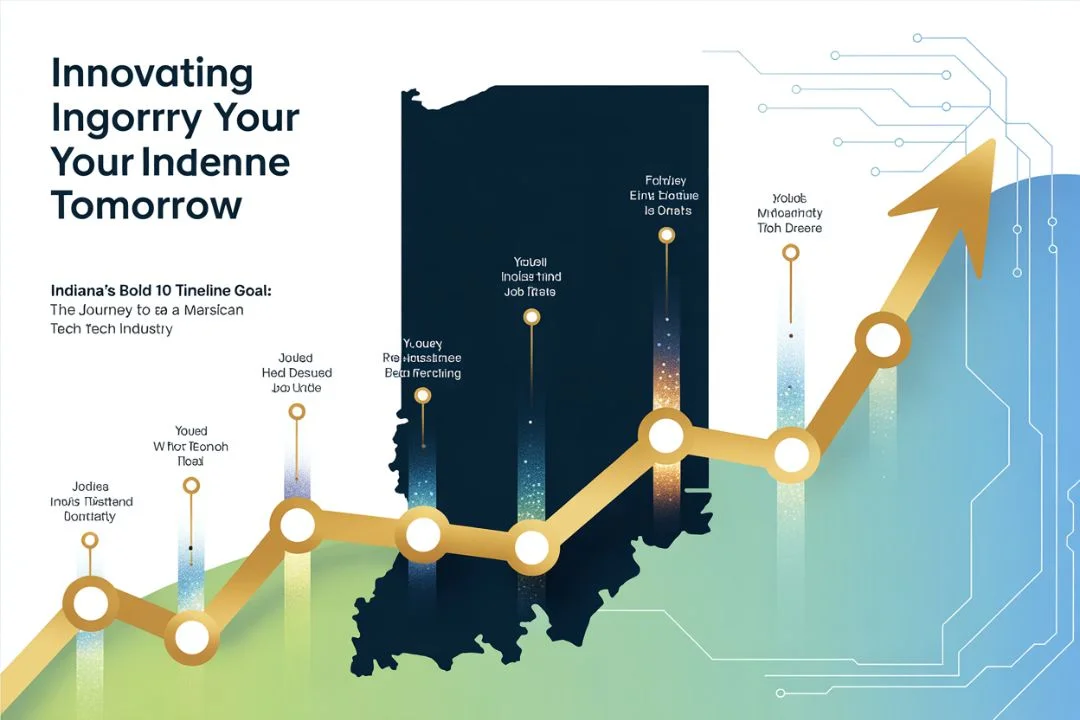
Indiana, a US state located in the Midwest, has earned its reputation in the past for its manufacturing, agricultural sector, and manufacturing. But now the state is on the threshold of a new era, where the goal is clear: “Indiana timeline goal in becoming a massive tech industry.” This goal is not just a slogan, but part of a coherent and phased strategy.
- This article will provide a detailed timeline of this journey, including:
- When and how Indiana took the plunge into the tech industry
- What policies, investments, and research centers were established
- What challenges were faced and efforts were made to address them
- Where the state stands today and what are the future goals
Let’s start with where Indiana took its first step on the path to technology.
Historical beginnings: time to sow seeds
1980-2000: Early Efforts and Infrastructure
- 1982: The state assembly established Indiana’s Corporation for Science and Technology, a nonprofit organization aimed at promoting high-tech economic development.
- During this same period, universities and educational institutions began to emphasize research and technical education. For example, Purdue University and the University of Notre Dame began to establish research parks, which later provided space and resources for tech startups.
- Technology parks like Ignition Park (South Bund) came into being, making the journey of nine eras and endeavors possible.
This early period was crucial in terms of infrastructure building: research, education, collaboration, and capital investment helped the state understand that technology was not just a business sector but the backbone of the economy.
2000-2010: Strong foundation and incubation culture
- 2001: Purdue University’s Discovery Park is established, which includes research centers and offices.
- Tech Parks’ government-accredited Certified Technology Park program begins, providing tax benefits and internal financing to tech incubation centers and research centers under state regulations.
- During this time, local startup culture and investor interest began to grow, although resources and senior technology companies continued to be lacking.
Timeline Goal Setting and State Strategy
2010-2015: State Partnerships and Policies
- Indiana launched the Regional Cities Initiative, which aimed to improve housing, quality of life, and talent retention in local areas so that people would stay and work instead of leaving the state.
Wikipedia - State government and business organizations, such as the Indiana Economic Development Corporation (IEDC), promoted investments, tax incentives, and workforce training programs to develop skilled workers for the tech industry.
2016-2020: Promotion, expansion and inclusion of modern technology
- 2016: The tech sector created nearly 1,800 new jobs, a significant increase in the state’s tech workforce.
- Plans like 16 Tech came into play, serving as a joint hub for technological research, life sciences, and innovative industries.
- Technology and innovation organizations such as the Indiana Technology & Innovation Association (ITIA) began to influence state legislation, participate in policymaking, and strive to create a favorable environment for technology startups.
Key turning points and recent developments (2021-2025)
This is the part where Indiana clearly makes her timeline goal felt, that is, the point she now wants to reach very soon.
Major Projects and Investments
- Amazon Web Services (AWS) has announced an $11 billion investment in northern Indiana, a plan to build a data center that will create at least 1,000 jobs.
- SK Hynix, a South Korean company, has decided to invest about $3.87 billion to build a semiconductor packaging plant and research and development center, which will meet the demands of artificial intelligence and advanced technology.
State Policies and Talent Development
- ITIA has set policies for 2024 and 2025 that aim to attract local and foreign investment, support startups and innovation, and adapt the education system to tech skills.
- State expands Next Level Jobs and STEM/Computer Science programs to prepare youth for the tech sector.
Economic Impact and Growth Forecasts
- Tech hubs and research centers are expected to create nearly 19,000 new jobs and about $8.5 billion in economic growth over the next ten years.
- The technology sector’s share of the state’s GDP continues to grow, and wages in the sector are significantly higher than the state’s general wage.
Challenges, obstacles and solutions
Basic Constraints
Lack of capital
Many startups are struggling with a lack of financial capacity. The state has tried to increase risk capital, but there is still a large-scale lack of VC funding.
Talent availability and quality of accommodation
Training tech workers and research experts is essential. In addition, housing, community facilities, and quality of life need to be improved so that people do not leave the state and prefer other cities.
Infrastructure and energy issues
Large data centers, semiconductor plants, and hard technology industries require stable electrical power, fast internet connectivity, and adequate transportation networks.
Continuation of policy and tax incentives
Some tech parks have reached their tax cap or are receiving limited tax benefits, which impacts their expansion and upgrading.
Suggestions for improvement
- Increase investment opportunities: Incentives should be provided to state and private investors to invest in tech startups, participate in VC funding, and initiate new research projects.
- Monitoring and upgrading of education and training: Education in STEM subjects, computer science, data science, artificial intelligence, etc. should be promoted in schools and universities. Teachers should be trained, course curriculum should be up to date.
- Infrastructure Strengthening: Ensure the facilitation of modern industries by improving energy sources, internet bandwidth, transport logistics, and resources.
- Quality of life and residential facilities: Increase good housing projects, health, cultural and recreational opportunities so that talent stays in the state.
Future goals and vision

- Indiana’s timeline goal is to achieve the following in the next 5 to 10 years:
- Establish a tech innovation hub like Silicon Valley or Silicon Heartland
- Tech and advanced industries contribute significantly to the state’s GDP
- Increase the number of data centers, AI research centers, and semiconductor plants
- Strengthen local startup culture, providing resources and capital to young innovators
- The number of tech industry employees and wages continue to grow
7 Big Benefits: Potential Benefits of Indiana Becoming a Tech Industry
Strong increase in economic growth
Investment in Indiana’s tech industry will significantly boost the state’s GDP. New startups, data centers, and semiconductor plants will not only increase tax revenue but also stimulate other industrial sectors, such as construction, education, and the service sector.
Numerous employment opportunities
The expansion of the tech sector will create thousands of new jobs, including engineering, programming, data science, cybersecurity, and administrative roles. This will provide a great opportunity for economic independence, especially for young people.
Education and skills development
Given the demands of the tech industry, STEM education will be promoted in Indiana schools, colleges, and universities. Students will learn advanced skills such as artificial intelligence, machine learning, blockchain, etc. This will create not only local but also international quality talent.
The state’s recognition at the international level will increase.
If Indiana succeeds in becoming a “Massive Tech Hub” in the tech industry, companies and investors from around the world will be attracted to it. The state will have a positive branding, which will also benefit other sectors such as tourism, business, and education.
Entrepreneurship opportunities for youth
Technological advancements are not just about jobs, they are also opening doors for new companies (startups). Young people will be able to start their own businesses right here in Indiana, with access to funding, mentorship, and technical support.
Tech solutions for environmental changes
Technology can also play a role in solving environmental problems. If Indiana works on green technology, smart cities, and energy efficiency, the state can also help reduce environmental pollution.
Disadvantages: (Potential disadvantages of expanding into Indiana’s tech industry)
Rising cost of living
The expansion of the tech industry could lead to significant increases in property prices, rents, and the cost of everyday items, putting the middle class and low-income earners under severe financial pressure.
Cultural and social changes
When a state experiences rapid technological development, people from outside start coming in. As a result, local culture and traditions may be affected. There is also a risk of deterioration in social harmony.
Pressure on local businesses
When big tech companies enter a market, local small businesses cannot compete with them. This can lead to the closure of many small businesses and damage to the traditional economy.
Increasing digital divide
While technology is for everyone, it often doesn’t reach rural and underserved areas. In Indiana, there is a risk that only urban areas will thrive and other areas will be left behind.
Environmental hazards
The technology industry, especially data centers, consumes a lot of energy. If energy sources are not environmentally friendly, this growth can lead to problems such as environmental pollution, greenhouse gases, and depletion of natural resources.
Elimination of jobs through automation
As technology advances, automation also increases. Machines will replace humans in many traditional sectors, which could lead to increased unemployment, especially for those without tech skills.
Data privacy and security issues
As the tech industry grows, so do the risks of hacking, data theft, and privacy. If cybersecurity is not addressed in Indiana, the safety of consumers’ personal data could be at risk.
FAQs: Frequently Asked Questions
Why does Indiana want growth in the tech industry?
Indiana is a state that has historically relied on agriculture and manufacturing, but technology has become a major global powerhouse. So Indiana is stepping into the tech industry to modernize its economy, create jobs, and attract investment.’
What does “Indiana timeline goal in becoming a massive tech industry” mean?
This phrase means that Indiana has set a clear timeline (period or roadmap) under which it wants to transform itself into a major technology state in the next few years. This includes measures such as education reforms, investments, innovation hubs, and bringing in global tech companies.
What tech sectors are receiving special attention in Indiana?
Indiana government and the private sector are working specifically on the following areas:
- Artificial Intelligence (AI)
- Cybersecurity
- Biotechnology
- Cloud Computing
- Data Science
- Smart Manufacturing
- Green Tech (Environmental Technology)
Which class will benefit the most from technological advancements in Indiana?
The younger generation, graduates, tech professionals, and entrepreneurs will benefit the most from this development. At the same time, as digital facilities increase in rural areas, people there will also be able to reap the fruits of this development.
What are the opportunities to study technology in Indiana?
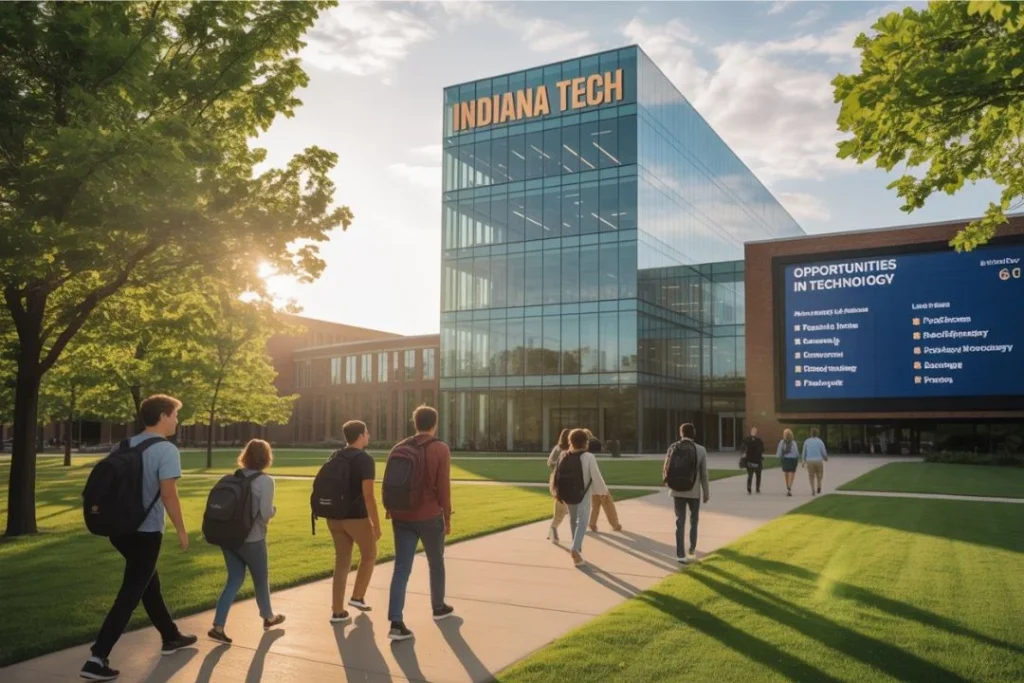
The state is now introducing cutting-edge IT, data science, AI, and STEM-based programs in universities and colleges. Several institutions are providing world-class education to students through internships, hackathons, and online courses.
(Conclusion)
Indiana’s dream of becoming a massive tech industry is not just an economic step, but a comprehensive vision that touches all aspects of employment, education, the economy, and social development. “Indiana timeline goal in becoming a massive tech industry” is not only a roadmap for the state’s futureRather, it could set a new precedent across the United States for how a non-traditional state can make its mark on the global stage through technology.
While there are many challenges along the way — such as environmental threats, class divisions, and digital security — if planning is strong, public-private partnerships are in place,And if the education and training system is updated to meet modern requirements, Indiana could become a stronghold of the tech industry in the near future.
This development will not only boost the state’s economy but also bring positive changes in the lives of ordinary people. But it is important that this development be balanced, inclusive, and beneficial to all — so that technology is not just a symbol of progress but also a means of social justice, equality of opportunity, and lasting prosperity.