
Introduction
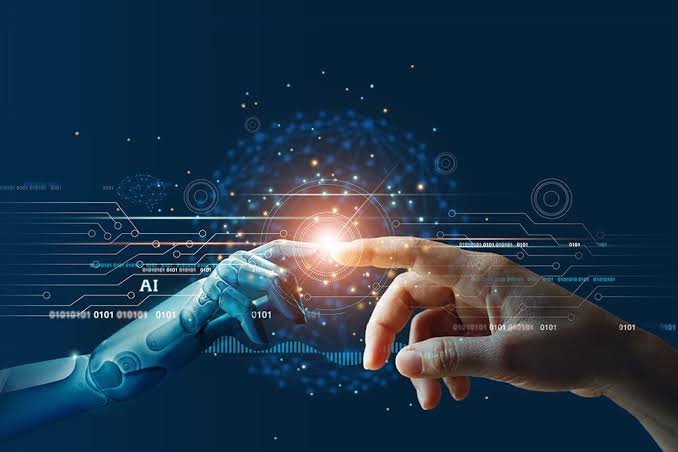
Artificial intelligence, commonly known as AI, has become one of the most important technological developments of our time. From voice assistants and chatbots to self-driving technology and advanced medical systems, AI is changing how people live, work, learn, and communicate. Tasks that once required hours of human effort can now be completed in minutes with the help of intelligent digital tools.
Over the past few years, AI has moved from being a specialized technology to something that millions of people use in their everyday lives. Students use AI tools to understand difficult subjects, businesses use them to improve productivity, and healthcare professionals explore new ways to support patient care. These changes show that artificial intelligence is not just a passing trend. It is becoming an important part of the future of technology.
However, the growth of AI also raises questions about privacy, employment, security, and the role of human intelligence. While AI offers many exciting opportunities, it is important to understand both its advantages and its limitations. The future will depend on how wisely people develop and use this powerful technology.
1. What Is Artificial Intelligence?
Artificial intelligence is a branch of computer science that focuses on creating systems capable of performing tasks that normally require human intelligence. These tasks include understanding language, recognizing images, identifying patterns, solving problems, and generating content.
AI systems learn from data and use patterns to produce predictions, recommendations, or responses. Some systems are designed for specific purposes, such as detecting unusual banking transactions or recommending products. Others can perform a wider range of tasks, including writing, summarizing information, answering questions, and helping users create digital content.
Machine learning is one of the main technologies behind modern AI. It allows computer systems to identify patterns in data and improve their performance on particular tasks. Another important development is generative AI, which can produce new text, images, audio, video, and computer code based on instructions.
Although these technologies can appear intelligent, they do not think or understand everything in the same way humans do. AI can make mistakes, misunderstand context, and produce inaccurate information. Human judgment remains essential when using AI for important decisions.
2. AI Is Transforming Everyday Life
One of the biggest changes brought by artificial intelligence is the way it has become part of everyday activities. Many people interact with AI without even realizing it. Search engines, recommendation systems, navigation applications, spam filters, and smartphone cameras all use forms of automated intelligence.
AI assistants are also becoming more useful. They can help users organize information, draft messages, summarize long documents, plan schedules, and generate ideas. Instead of spending time on every small task manually, people can use these tools to work more efficiently.
Smart homes provide another example. AI-powered systems can help manage lighting, temperature, security cameras, and connected appliances. Some devices can learn from user preferences and adjust their behavior accordingly.
Online shopping and entertainment platforms also rely on AI to recommend products, music, films, and other content based on previous activity. These recommendations can make services more convenient, although they can sometimes limit the range of information people encounter.
As AI becomes more common, digital tools will likely become increasingly personalized. The challenge will be ensuring that convenience does not come at the expense of privacy, independence, or informed decision-making.
3. The Future of AI in Education
Education is one of the areas where artificial intelligence could make a significant difference. Traditional classrooms often require teachers to support students with different learning styles, abilities, and educational needs. AI tools may help make this process more flexible.
For example, an AI learning assistant can explain a difficult concept in simpler language, generate practice questions, or provide examples based on a student’s level of understanding. Students learning a foreign language can use digital tools to practice vocabulary, grammar, and conversation.
Teachers may also benefit from AI. It can help prepare lesson materials, organize classroom resources, and develop activities for different learning levels. By reducing certain administrative tasks, these tools may allow teachers to spend more time supporting students directly.
However, AI should not replace the important role of teachers. Education is not only about receiving information; it also involves developing curiosity, discipline, creativity, communication, and critical thinking.
Students must also learn to use AI responsibly. Copying answers without understanding them can weaken learning and problem-solving skills. Schools will need clear guidelines that encourage students to use AI as a learning partner rather than as a shortcut.
When used thoughtfully, AI can make education more accessible and help students develop the skills needed for a technology-driven future.
4. AI and the Future of Healthcare
Healthcare is another field where artificial intelligence is creating new possibilities. Medical professionals handle large amounts of information, and AI tools can help analyze certain types of data more quickly.
For example, AI systems can assist with examining medical images, identifying patterns in laboratory results, and organizing patient records. In carefully evaluated applications, these tools may help clinicians recognize signs that deserve further investigation.
AI can also support administrative work by helping prepare documentation, manage appointments, and organize information. Wearable devices and remote monitoring systems may provide healthcare teams with additional information about a patient’s condition.
Researchers are exploring AI applications in drug discovery and medical research as well. Analyzing large datasets can help scientists investigate possible treatments and identify promising areas for further study.
Despite these benefits, healthcare AI must be used carefully. An incorrect recommendation could have serious consequences, and systems may perform differently across patient groups. Protecting sensitive medical information is also essential.
AI should therefore support qualified healthcare professionals rather than independently replace their judgment. Medical decisions require experience, communication, ethical responsibility, and an understanding of each patient’s circumstances.
5. How AI Is Changing Business and the Workplace
Businesses across many industries are adopting artificial intelligence to improve efficiency and make better use of information. From small companies to large international organizations, AI tools can help automate repetitive tasks and support decision-making.
Customer service is one example. AI chatbots can answer common questions, provide basic instructions, and direct customers to relevant services. In marketing, AI can help businesses analyze customer preferences, develop campaign ideas, and understand the performance of their content.
Financial organizations use AI-based systems to identify unusual transactions and support fraud detection. Manufacturers can use intelligent systems to monitor equipment, identify possible maintenance problems, and improve production planning.
AI can also help employees with writing, research, data analysis, and software development. These applications may reduce the time needed for routine work and allow people to focus on tasks that require creativity, judgment, and personal interaction.
However, the effect on employment is a major concern. Some jobs may change significantly as automated systems take over particular tasks. Other roles may emerge as organizations need people who can develop, manage, evaluate, and secure AI technologies.
Rather than assuming that every job will disappear, it is more useful to recognize that many jobs may evolve. Workers who develop digital skills, communication abilities, and problem-solving expertise will be better prepared to adapt to these changes.
6. AI, Robotics, and Automation
The combination of artificial intelligence and robotics is creating new opportunities in manufacturing, agriculture, logistics, and other industries. Traditional robots usually perform tasks within carefully controlled environments. Newer systems can use AI to interpret information from cameras and sensors, helping them respond to changing conditions.
In warehouses, robots can assist with moving goods and organizing inventory. In agriculture, automated equipment may help monitor crops and identify areas that require attention. In manufacturing, intelligent machines can inspect products and detect certain defects.
Researchers are also developing more capable robots for environments where repetitive or physically demanding tasks can be difficult for people. In the future, these systems may provide additional support in areas such as inspection, maintenance, and assistance for older adults.
Nevertheless, building reliable robots that can operate safely in unpredictable environments remains challenging. Physical surroundings are complex, and even small errors can lead to damage or injury.
Robotics also raises questions about the future of human work. Companies and governments will need to consider worker safety, training, and opportunities for people whose responsibilities change because of automation.
The most practical approach is to design systems that allow humans and machines to work together, using automation where it provides clear benefits while preserving human oversight.
7. AI and Cybersecurity
As more information moves online, cybersecurity has become increasingly important. Artificial intelligence can help protect digital systems by analyzing unusual behavior, identifying suspicious transactions, and detecting potential threats.
Security teams can use AI to process large amounts of information and identify patterns that might otherwise be difficult to notice. This can help organizations respond to certain threats more quickly.
However, AI can also be misused. Cybercriminals may use automated tools to create convincing scam messages, impersonate trusted individuals, or assist with certain stages of cyberattacks. Fake images, audio, and video can also make it harder to determine whether digital content is genuine.
This creates a situation in which AI can strengthen digital security while also introducing new risks.
Individuals should continue using strong passwords, enabling multi-factor authentication, installing security updates, and checking suspicious requests carefully. Businesses must invest in security training, monitoring, and reliable systems for protecting sensitive data.
Technology companies also have a responsibility to develop safeguards that reduce misuse. As AI becomes more powerful, cybersecurity practices must continue evolving alongside it.
8. The Challenges and Risks of Artificial Intelligence
Although artificial intelligence offers many benefits, it also presents challenges that society must address.
One major concern is privacy. AI systems may rely on large amounts of information, including personal data. If that information is collected or stored carelessly, it can expose people to unwanted surveillance or data breaches.
Another concern is misinformation. Generative AI can produce realistic-looking images, videos, and written content that may be misleading. People need to verify important claims and consider the reliability of the sources they encounter online.
Bias is also a serious issue. If an AI system is trained on incomplete or unbalanced data, it may produce unfair results. This can be particularly concerning in areas such as recruitment, lending, education, and healthcare.
The environmental impact of AI deserves attention as well. Training and operating large AI models can require significant computing resources, electricity, and cooling. Improving efficiency and investing in sustainable infrastructure will become increasingly important.
Finally, there is the question of responsibility. When an AI system makes a harmful mistake, organizations need clear processes for investigating what happened and correcting the problem.
Addressing these challenges requires cooperation between technology developers, governments, researchers, businesses, and the public. Innovation should move forward alongside safety, transparency, and accountability.
9. What Will AI Look Like in the Future?
The future of artificial intelligence is likely to involve more capable assistants, better integration with everyday software, and wider use across different industries. AI systems may become better at helping people coordinate complex tasks, analyze information, and interact with digital services.
Scientific research is another promising area. AI may help researchers study complex biological systems, develop materials, analyze climate data, and investigate questions that require processing enormous amounts of information.
Transportation could also benefit from further advances in intelligent systems. Driver-assistance features, traffic-management tools, and automated logistics systems may improve efficiency in particular settings, although widespread autonomous operation still faces technical, legal, and safety challenges.
AI could also support accessibility by helping people translate languages, generate captions, describe images, and interact with devices through different forms of communication.
However, the future is not predetermined. The direction of AI will depend on research, investment, public policy, and the decisions made by the people who develop and use it.
The most valuable progress will be measured not only by technical performance but also by whether these systems solve real problems and improve people’s quality of life.
Conclusion
Artificial intelligence is playing an increasingly important role in the future of technology. It is changing education, healthcare, business, robotics, cybersecurity, and many other areas of modern life. By helping people analyze information, automate repetitive tasks, and explore new ideas, AI offers opportunities to improve productivity and support innovation.
At the same time, its development brings challenges involving privacy, misinformation, employment, bias, and security. These concerns cannot be ignored if AI is to benefit society in a fair and responsible way.
People should focus on learning how AI works, understanding its limitations, and developing the skills needed to use it effectively. Businesses should prioritize responsible implementation, while educational institutions should help students prepare for a changing digital world.
Ultimately, artificial intelligence should not be viewed as a replacement for everything humans can do. Its greatest value may come from supporting human creativity, knowledge, and decision-making.
The future of technology will be shaped not only by how powerful AI becomes, but also by how responsibly people choose to use it. With the right balance of innovation and human judgment, artificial intelligence can become a valuable tool for building a smarter, safer, and more productive world.